

For months Microsoft is using the term becoming an agent boss, and with the announcements back in September it’s crystal clear, that Copilot will be your platform, rather than just a chatbot. With the latest “super app” announcements Microsoft brought Copilot even more in the center of your daily work.
The concept of “digital employees” are here for several month, however at this point it wasn’t that easy to really go all-in.
And since last Thursday, you can @mention an agent in a Word, Excel or Powerpoint and also add it in a Teams or Channel. Like a colleague. It has its own mailbox, it shows up in Teams and in your company directory.
For now, this only works in tenants that are part of Microsoft’s Frontier (aka preview) program. And in the preview, the agent reports to whoever built it.
Last week’s episode was about skills. On copilotyourday.com I describe the difference in one line: a skill is a play, an agent is a player. This week Microsoft gave the player a jersey with a name on it.
That changes the question. Building an agent used to be an IT topic. Giving it an account turns it into an org chart decision. Who is accountable for it? What may it decide on its own? And who pays for it?
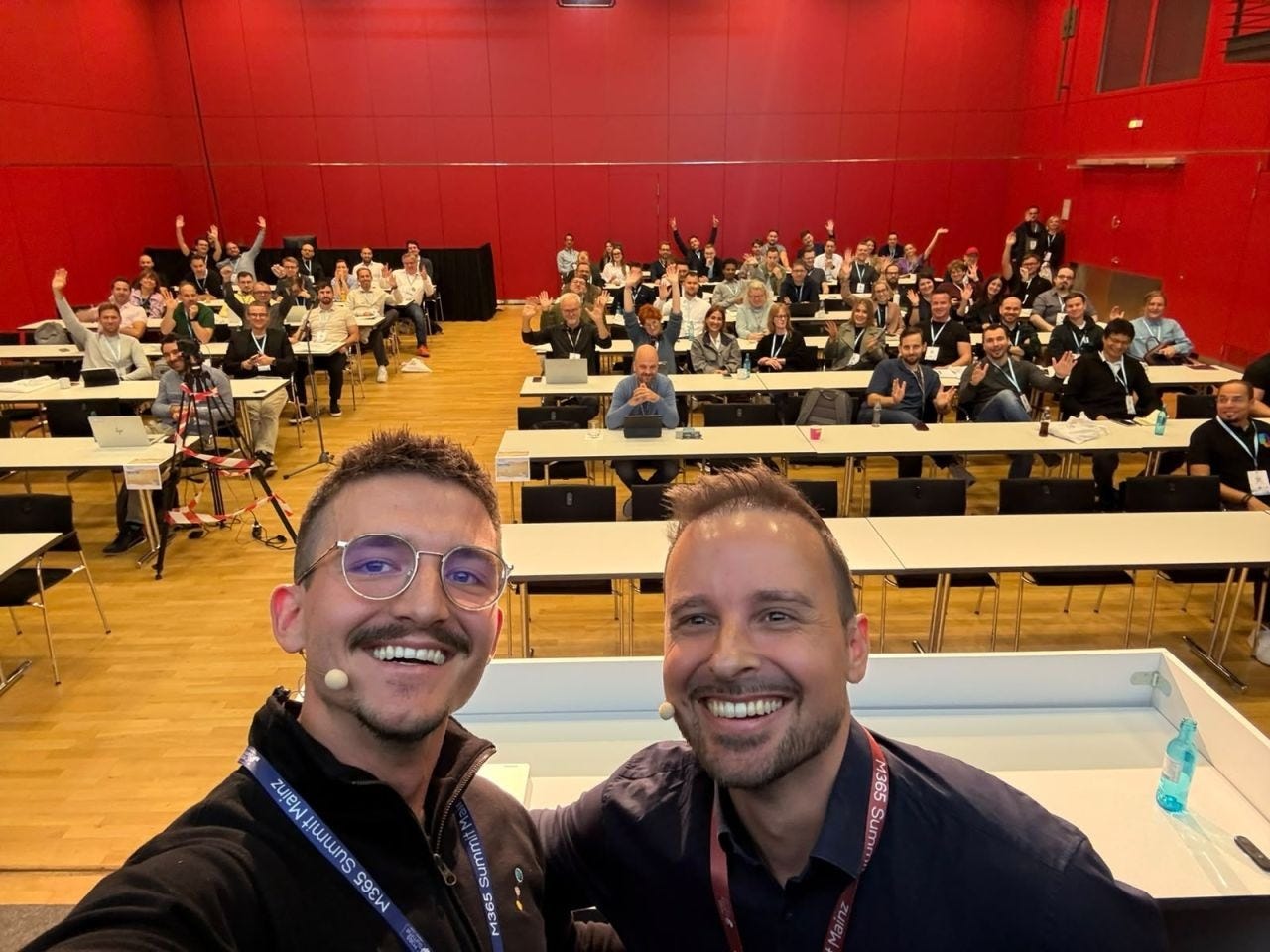
Last Tuesday, Marco Steiner and I shared the learnings from the Agent Factory at Swiss Post at the M365 Summit in Mainz. One of them fits this announcement almost word for word:
no agent without a business owner.
What Microsoft shipped last Thursday
Microsoft announced that Copilot Studio agents can get their own account. That means a real identity in Microsoft 365, with its own Entra agent ID and its own mailbox.
People can @mention the agent in Teams, reply to it in Outlook and tag it in comments in Word, Excel and PowerPoint. It works with its own credentials and its own scoped permissions (not with yours). And its work is attributed to the agent, so you can see what the agent did and what a person did.
On top, these agents get a shared memory for the business process. What one person explains once, the agent remembers for the whole team.
Microsoft’s own example is a budget agent in finance. It prepares the weekly review, compares forecasts with the explanations and asks budget owners when a number doesn’t add up. Finance keeps the authority over allocations and spending.
Microsoft’s pitch behind all of this:
agents that belong to the organization, not to one person. Keep that in mind for the next section.
The fine print of the announcement
All of this is a Frontier preview, and Microsoft’s documentation is marked as prerelease. So this is what it says today:
Your tenant needs to be in the Frontier program, and the environment runs on the early release cycle.
The maker needs Microsoft 365 E5 with the Agent 365 add-on, or E7. Each agent with an account uses its own “Microsoft 365 Frontier for AI Teammates” license.
Usage is billed on top in Copilot Credits.
The agent reports to the person who built it, and its email address starts with the maker’s alias. In the preview, you can’t change either.
The memory is shared across everyone who works with the agent, and you can’t opt out. Microsoft itself warns that summaries of shared files and chats can show up in answers to people who don’t have access to the original.
Documents with protective sensitivity labels stay off limits for the agent.
No external users. In email, the agent only answers conversations with up to 250 people.
In the EEA, Teams is licensed separately. Without a Teams license, the agent gets its mailbox but doesn’t show up in Teams.
The controls most IT leaders will ask for first, like cost management and lifecycle controls specific to these agents, are announced for “the coming months”.
The Microsoft 365 roadmap lists November 2026 as the target for general availability. So the preview won’t stay a preview for long.
Microsoft pitches agents that belong to the organization. In the preview, the org chart says they report to the person who built them.
🥵 Quick hydration break between sets: Between Mondays, I post daily on LinkedIn. Hands-on tests, frameworks and more.
German companies already decided how far they’d go
Two days before Microsoft’s announcement, the German internet association eco published a Civey survey of 500 companies in Germany.
54% use or test AI agents, but only 11% company-wide.
33% have no plans at all.
40% would allow supporting tasks only.
34% would allow independent work under human oversight.
13% would let agents decide in single sub-processes.
Only 5% would let them decide fully on their own.
The safeguards they want first: an automatic emergency shutdown (47%) and strict rights and roles (45%).
eco reports a margin of error of around nine percentage points. eco’s own reading: caution in practice isn’t the same as skepticism. Companies introduce agents step by step and limit autonomy where they don’t want to hand over responsibility.
And that’s the point. Autonomy is a question of responsibility. So it needs a responsible person.
Microsoft just built agents that can work on their own. Most companies would let them assist at best. So of course there’s still a gap to close, and it’s not the admin center that closes this gap.
Three decisions before an agent gets an account
First of all have in mind this is just in Frontier and has been released last week.
1. The business owner, is not automatically the maker
No agent without a business owner. The business responsibility must be clear before go-live and stay clear after it. Who keeps an eye on usage, feedback and cost? If nobody can answer that, a precondition for scaling is missing.
Microsoft Entra already has a field for this: the sponsor, the person accountable for the agent’s purpose and lifecycle. If the sponsor leaves the company, sponsorship moves to their manager automatically. But Copilot Studio fills the field with the agent’s owner by default. The person who built the agent is rarely the person who owns the process.
2. An autonomy level per process
The guidelines decide which data the agent may use and which actions it may take. And the human approval has to be defined.
The eco answers already give you the ladder: assist, work under oversight, decide in a sub-process, decide alone. Pick one level per process, not one level for “AI”.
Microsoft’s budget agent shows how that looks. It may decide which numbers to flag and whom to ask. Whether a budget changes stays with finance.
3. A budget in the business
The cost has to move away from central IT, directly into the business. Nobody books flights through a central IT account. Travel budgets sit with team and department heads, because that’s where people decide whether the trip is worth it.
Agents and compute-heavy workflows draw credits from the budget of the business unit that uses them. An agent with its own account makes this easier: it has a name, so it can have a cost center.
If you haven’t started yet, now it’s the time to start prepare your organization.
Agent governance
Operating Model to scale like an agent factory
FinOps for AI
Why this lands on the management table
I wrote it a few weeks ago: at some point, the biggest AI challenge is no longer innovation, we have innovation every other day.
the biggest challenge is to decide.
And that’s why AI becomes a management topic.
Frontier Firms treat agents as managed team members with identity, ownership, cost and quality standards. Agent accounts deliver the identity. Ownership, cost and quality standards are still your job.
That’s what the Agent Factory is for. It’s the operating model that makes scaling work, from the first request to the day an agent is retired. And it’s become more critical than ever.
The Autopilot Era is here
I like this announcement. Every agent gets a visible identity, and its work is attributed to it. Governance teams have been asking for exactly that.
You can now build your own Autopilot agents in Copilot Studio, at this point it bothers my that by default the maker is the sponsor of the agents. It would be great to have directly integrated in the Studio experience to change it, but let’s see what’s coming.
So before your first agent gets an account, decide who its boss is. Otherwise the default decides for you.
I’m really excited to this announcement, I truly believe this brings so much new capabilities in the platform and our daily work. However we need to do it right.
Access isn’t fitness. Make sure your Agents with an identity has a great fitness.
That’s why: Let’s Copilot Your Day 🔥
Take it with you
Cheatsheet: Skill or agent? Seven questions before you build. A skill is a play, an agent is a player. Seven questions decide which one your task needs, and what a wrong call costs.
Tactic board: Play or player?. Tap through the four questions with your team before the next agent request lands.
Guides: The Agent Factory for the operating model, Skills vs. Agents for governance and Copilot Licensing & Agent Economics for credits and license tiers.
Read on in the archive
Episode 98 — The Agent Factory Blueprint: the operating model behind the three decisions.
Episode 111 — Agent 365 is GA: the control plane that provisions and governs these agent accounts.

what happens when agents show up before anyone owns them.
Sources for this edition: Microsoft’s announcement, the documentation for agent accounts, owners, sponsors and managers in Entra Agent ID and the eco survey.
FAQ
AI-generated FAQ documentation on this episode
What are agent accounts in Copilot Studio?
Agent accounts give a Copilot Studio agent its own identity in Microsoft 365: an Entra ID, a mailbox and a place in Teams and the company directory. People can @mention the agent in Teams, email it in Outlook and tag it in comments in Word, Excel and PowerPoint. The agent works with its own scoped permissions, and its work is attributed to it. Microsoft announced the feature on October 15, 2026, as a Frontier preview.
What licenses do agent accounts need?
According to Microsoft’s prerelease documentation, the maker needs Microsoft 365 E5 with the Agent 365 add-on, or Microsoft 365 E7. Each agent with an account uses its own “Microsoft 365 Frontier for AI Teammates” license, and the tenant must be enrolled in the Frontier program. Usage is billed separately in Copilot Credits. Details can still change before general availability.
Who is accountable for an agent with its own account?
In Microsoft Entra Agent ID, every agent identity needs a sponsor: the person accountable for the agent’s purpose and lifecycle. Copilot Studio adds the agent’s owner as sponsor by default, and in the current preview the agent reports to its maker. Pascal Brunner-Nikolla’s rule from his Agent Factory work: no agent without a business owner, defined before go-live.
Is the memory of an agent with an account private?
No. Agents with their own account use one shared memory across everyone they work with, and users can’t opt out in the preview. Microsoft warns that summaries of shared files and chats can appear in answers to people who don’t have access to the originals. Documents with protective sensitivity labels can’t be read by the agent.
How far do companies in Germany let AI agents decide?
In an eco survey by Civey of 500 companies in Germany, 54% use or test AI agents, 11% of them company-wide. 40% would allow supporting tasks only and 34% independent work under human oversight. 13% would allow autonomous decisions in single sub-processes and 5% fully autonomous decisions. eco states a margin of error of around nine percentage points.
What should we decide before an agent gets its own account?
Three things: a business owner who is accountable for the process, which is not automatically the maker. An autonomy level per process, with defined data, actions and human approval. And a budget in the business unit that uses the agent. Without these, an agent with an account scales confusion instead of work.